The Paper Clutter System That Actually Sticks (Because Most Don't)
Quick Answer: A lasting paper clutter system needs three parts working together — a single daily landing zone for incoming mail, a weekly 10-minute sort into keep/action/recycle, and a monthly file-and-shred session — a one-time purge without these ongoing habits is why paper clutter always seems to come back within weeks.
You declutter the paper pile, feel great for two weeks, and then it’s back — not because you did the purge wrong, but because a purge alone was never going to be enough.

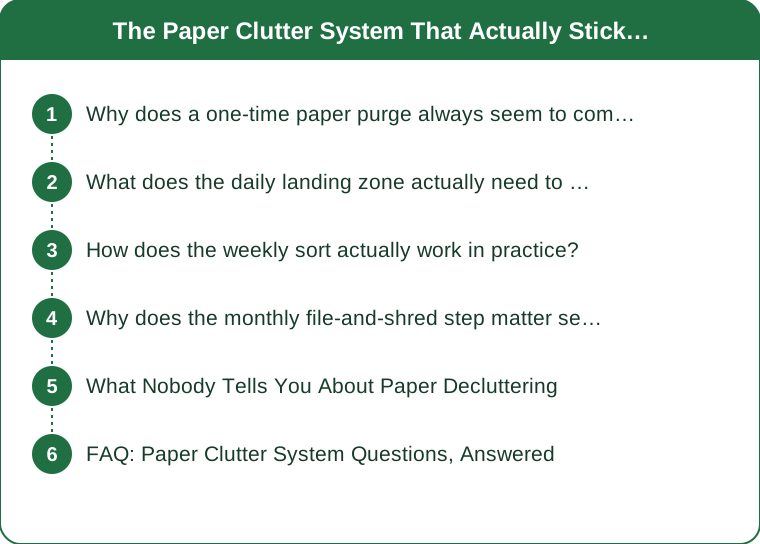
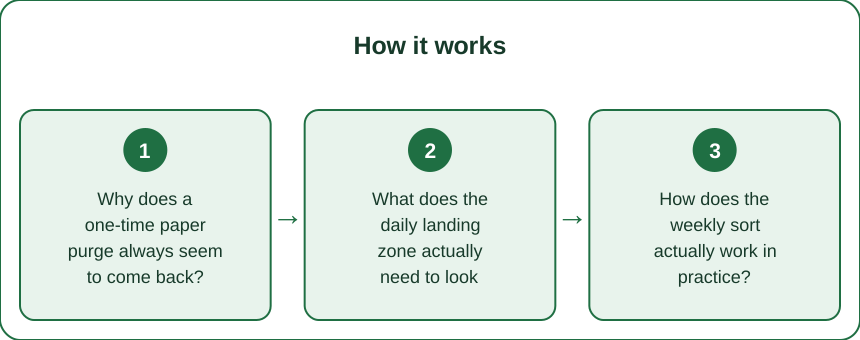
Why does a one-time paper purge always seem to come back?
A purge clears existing clutter but does nothing about the ongoing daily influx of mail, receipts, and school or work papers — without a system to process that steady stream, it simply rebuilds the pile at the same rate it always did, usually within a few weeks.
What does the daily landing zone actually need to look like?
A single, designated spot — a tray, a basket, a specific counter spot — where every piece of incoming paper goes the moment it enters the house, with zero exceptions. The system fails the moment paper starts landing in multiple random spots, since that’s what makes the next sort feel overwhelming instead of quick.
How does the weekly sort actually work in practice?
Once a week, sorting everything from the landing zone into three piles — keep (needs filing), action (needs a response or task), and recycle — takes most people under 10 minutes if it’s done weekly rather than left to build up, since a small pile sorts fast and a month-old pile doesn’t.

Why does the monthly file-and-shred step matter separately from the weekly sort?
The weekly sort creates a ‘keep’ pile, but that pile still needs an actual home — a monthly session to file those papers properly (or shred what turned out not to need keeping) prevents the ‘keep’ pile itself from silently becoming the new clutter problem.
What Nobody Tells You About Paper Decluttering
Most decluttering content shows the dramatic before-and-after of the purge itself, almost never the boring weekly maintenance that actually prevents the after photo from looking like the before photo again in a month. The unglamorous ten-minute weekly habit is doing more long-term work than the satisfying one-time purge ever did.
FAQ: Paper Clutter System Questions, Answered
What should actually get kept long-term versus digitized and recycled?
Tax documents, legal papers, and anything with an original signature typically need physical keeping; most receipts, statements, and informational mail can be photographed or scanned and recycled once processed.
How do I stop the landing zone itself from becoming a permanent pile?
The weekly sort is what prevents this — if the landing zone isn’t cleared at least weekly, it functions as just another clutter spot rather than a temporary holding zone.
Does this system work for a household with kids’ school paper too?
Yes, with one addition — a separate landing spot specifically for kids’ papers (permission slips, artwork, assignments) tends to work better than mixing it into the general household mail zone, since the sorting decisions are different.
TL;DR:
- A one-time purge fails because it doesn’t address the ongoing daily paper influx
- A single daily landing zone, cleared weekly into keep/action/recycle, is the core of a system that holds
- A monthly file-and-shred session prevents the ‘keep’ pile from becoming its own clutter problem
- The unglamorous weekly habit does more long-term work than the satisfying one-time purge
Set up one landing zone this week and commit to a 10-minute Sunday sort — that’s the part that actually keeps the pile from coming back.
Keep Reading
This article is for general informational and styling purposes only. Fit, sizing, and product availability may vary.