Why Doesn't Decluttering Actually Fix the Clutter Problem Long-Term?
Quick Answer: A big decluttering session removes existing clutter but doesn’t change the daily habits and incoming-item systems that created it in the first place, so without a maintenance system (a designated home for new items, a regular re-audit, and an intake rule), clutter typically returns within 3-6 months.
You did the big purge — bags to donation, a satisfying empty shelf — and six months later it’s full again. The purge worked exactly as intended. It just never addressed the system that refills it.

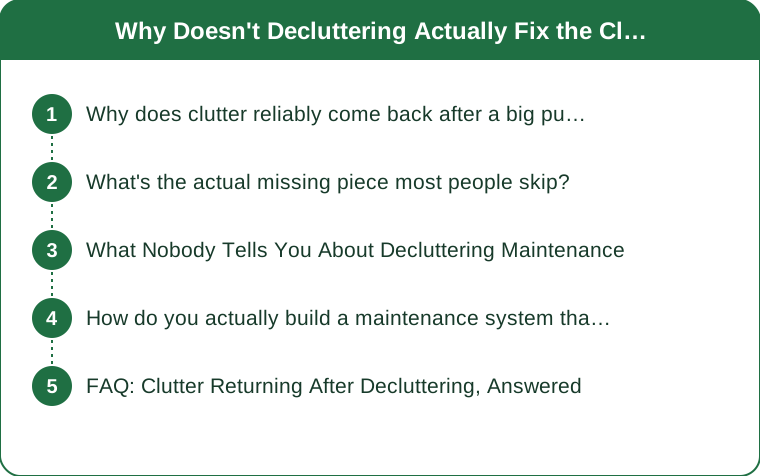
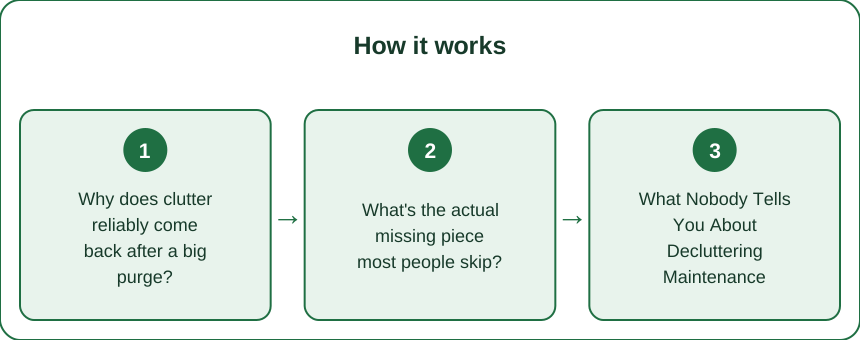
Why does clutter reliably come back after a big purge?
A decluttering session addresses the existing backlog, but clutter accumulates through ongoing daily habits (no home for new items, impulse purchases, mail and paper piling) that a one-time session doesn’t touch.
Without changing the intake rate — how much new stuff enters your space and how quickly it’s dealt with — you’re essentially resetting the counter to zero and starting the same accumulation pattern over again.
What’s the actual missing piece most people skip?
A designated ‘home’ for every category of item, decided during the declutter, not after — clutter often isn’t about owning too much, it’s about items without an assigned place landing wherever is convenient in the moment, which compounds daily.
The second missing piece: a regular mini re-audit (10 minutes weekly, not a full purge) catching small accumulation before it becomes a big one again.

What Nobody Tells You About Decluttering Maintenance
A one-in-one-out rule is more effective long-term than periodic big purges — deciding what leaves when something new enters keeps the total volume roughly stable continuously, rather than letting it grow for months before another big intervention.
Also underrated: the specific trigger points where clutter enters your home (mail, kids’ school papers, shopping bags) benefit from a dedicated processing system right at the entry point — most clutter accumulates from these predictable sources, not random items.
How do you actually build a maintenance system that sticks?
- Assign a home for every category during your next declutter, not just discard/keep
- Adopt one-in-one-out for categories prone to growth (clothes, books, kitchen gadgets)
- Set a weekly 10-minute reset for the highest-traffic clutter zones (entryway, counters)
- Process mail and papers at the door, not by carrying them further into the house first
FAQ: Clutter Returning After Decluttering, Answered
How long does clutter typically take to return after a big purge?
Commonly 3-6 months without a maintenance system — the timeline varies by household size and how much the underlying habits actually changed.
Is doing a big declutter purge a waste of time then?
No — it’s a necessary reset, just not sufficient on its own; pairing it with a maintenance system is what makes it stick.
What’s the single easiest maintenance habit to start with?
One-in-one-out for whichever category grows fastest in your home — it requires no extra time investment, just a decision point at the moment something new comes in.
TL;DR:
- A big purge clears existing clutter but doesn’t change the habits that created it
- Assigning a specific home for every item category is the most-skipped, most-effective step
- One-in-one-out beats periodic big purges for keeping volume stable long-term
- A 10-minute weekly reset at high-traffic zones catches accumulation before it compounds
The purge isn’t the failure — skipping the maintenance system afterward is.
Keep Reading
This article is for general informational and styling purposes only. Fit, sizing, and product availability may vary.