Decluttering a Closet Full of 'Someday' Workout Clothes
Quick Answer: Workout clothes tend to accumulate because they’re tied to identity and future intentions (‘when I get back into running’) rather than just past outfits, so an effective declutter separates pieces by actual current activity level and honestly assesses whether a ‘someday’ piece serves a real, specific plan or just a vague hope.
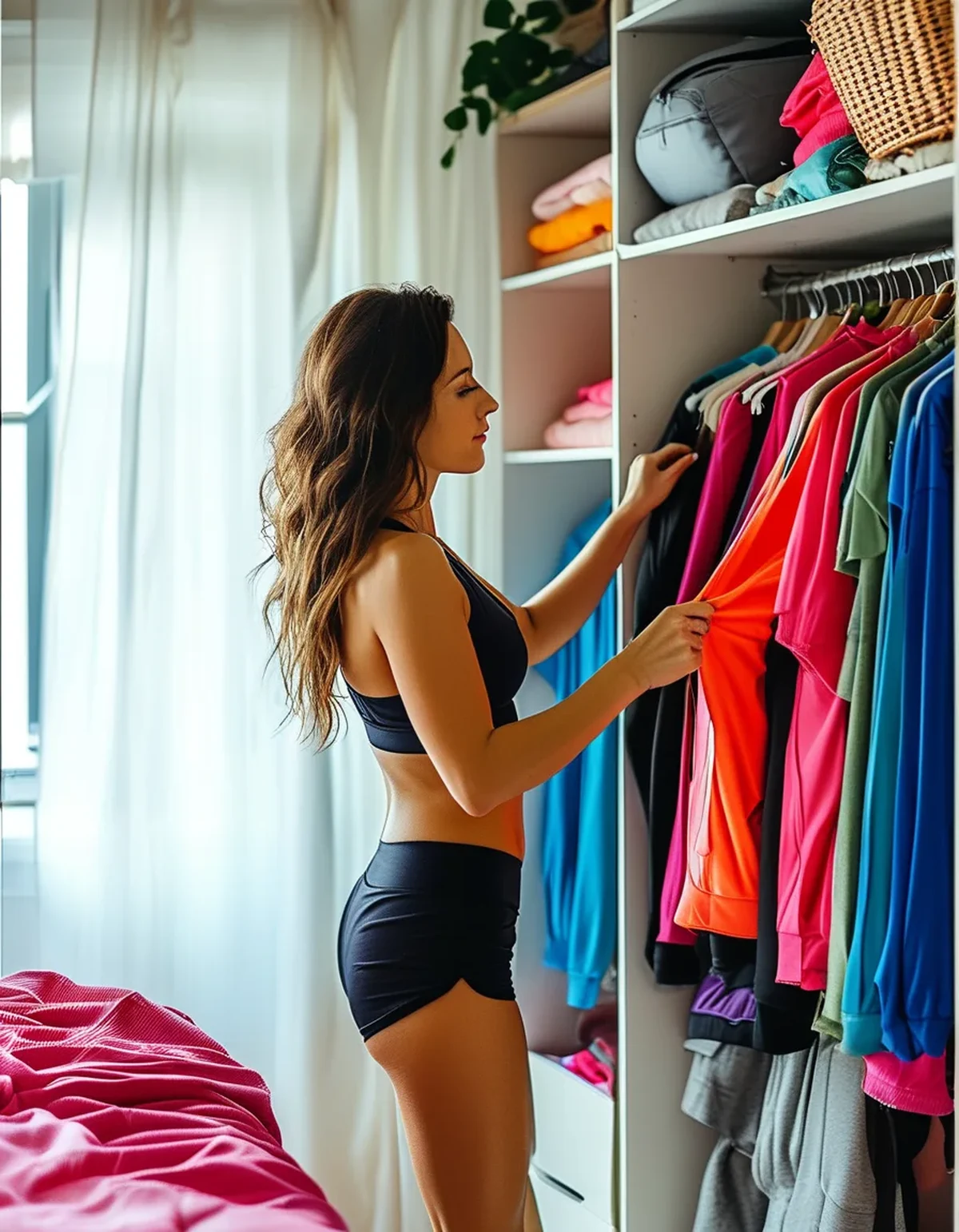
A closet stuffed with activewear from three different fitness phases isn’t really a clutter problem first — it’s usually an unresolved decision problem wearing a clutter costume.

Why does activewear pile up more than regular clothing?
Workout clothes get attached to identity and aspiration in a way everyday clothes often don’t — a piece bought for a fitness goal that didn’t stick around can feel harder to release than a shirt that just went out of style, since letting it go can feel like admitting the goal didn’t happen.
What’s a more useful sorting question than ‘might I need this someday’?
Asking ‘have I done this specific activity in the last 6 months, and do I have a concrete plan to do it in the next 3’ cuts through vague someday-thinking far more effectively than the open-ended ‘might I need this’ question, which almost always produces a yes.
5 Mistakes People Make Decluttering Activewear Specifically
- Keeping pieces from a past body size ‘for motivation,’ which research on this specific pattern suggests rarely functions as intended.
- Holding onto sport-specific gear (like cycling kits) for a hobby not actually practiced in over a year.
- Keeping duplicates ‘just in case one gets dirty’ well beyond a reasonable buffer.
- Not accounting for genuinely worn-out elastic or fabric that no longer performs, regardless of sentimental value.
- Treating every piece as equally hard to release, instead of starting with the clearly easy decisions first to build momentum.
What should actually happen to the pieces you release?
Activewear in good condition is generally well-suited to donation (many shelters and gyms specifically need it) or resale through secondhand activewear marketplaces, both of which give the decision to release something that still has real utility, rather than framing it purely as loss.
FAQ: Decluttering Workout Clothes Questions, Answered
Should I keep one ‘aspirational’ size just in case?
Most professional organizers recommend against this specifically for activewear, since it tends to create a low-level daily reminder that can affect motivation more than it helps.
How many workout outfits do I actually need for one activity?
For most people doing an activity 2-4 times weekly, 4-6 outfits in rotation is generally sufficient without requiring frequent extra laundry.
What if I genuinely might return to an old sport soon?
If there’s a concrete plan (a signed-up class, a season starting), keeping relevant gear is reasonable — the distinction is a specific plan versus an open-ended hope.
TL;DR:
- Activewear clutter is often an unresolved decision wearing a clutter costume
- ‘Have I done this in 6 months, will I in the next 3’ beats a vague someday question
- Aspirational-size pieces tend to hurt rather than help daily motivation
- Donating or reselling still-useful pieces reframes release as giving, not losing
A closet decluttered by actual activity level, not vague future hope, tends to stay decluttered longer.
Keep Reading
This article is for general informational and styling purposes only. Fit, sizing, and product availability may vary.