The Declutter Method That Sticks: Less Stuff, Lighter Head
Clutter is not a housekeeping issue — it is a cognitive one: research links visually chaotic homes with higher cortisol (notably in women, who studies show disproportionately register home-state as personal workload) and every pile is an open loop your brain re-notices dozens of times daily. Decluttering, done right, is not tidying. It is deleting background processes. Here is the method that works for people whose previous method was buying organizing bins for stuff they do not need.

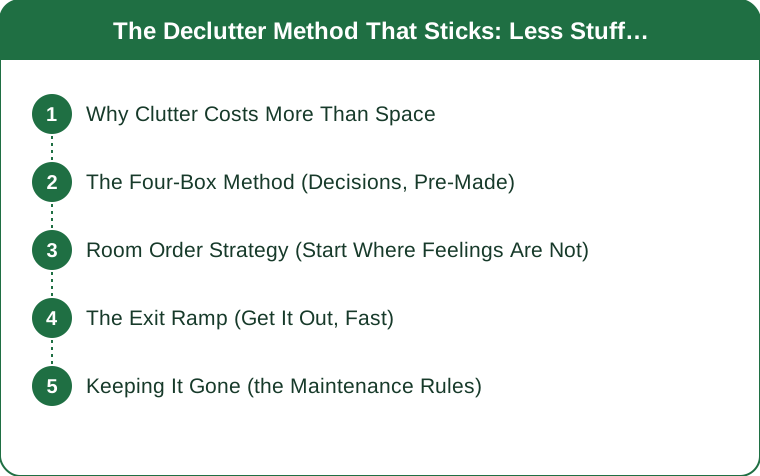
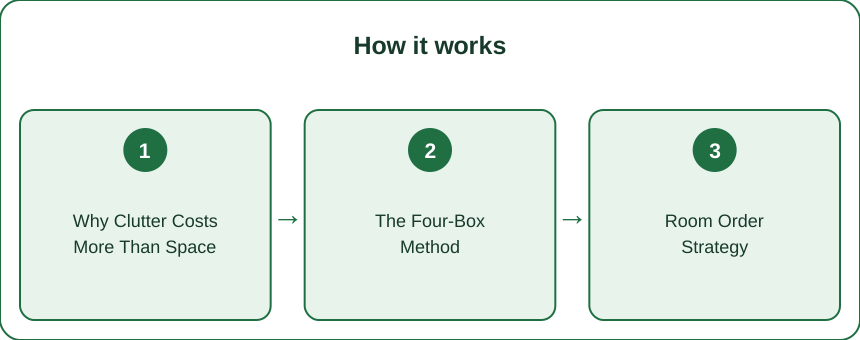
Why Clutter Costs More Than Space
The science of stuff: visual clutter competes for your attention constantly — your brain processes every visible object at low level, all day — and studies tie cluttered environments to measurably higher stress hormones, worse focus and even poorer sleep in cluttered bedrooms. Add the practical taxes: the 15 daily minutes hunting for things, the duplicate purchases of items you own but cannot find, the low hum of I should deal with that. Decluttering pays out in the currency modern women are shortest on: attention. The clean counter is not aesthetic. It is a quiet mind with a surface.
The Four-Box Method (Decisions, Pre-Made)
The engine of every successful declutter: four boxes — Keep, Donate, Trash, and the crucial fourth, Undecided. The first three are obvious; the fourth is the psychological unlock: items you cannot decide on go in the box, the box gets sealed, dated six months out, and stored. Whatever you never retrieve, donate unopened — you have run the experiment and the data is in. This ends the single biggest declutter-killer: the twenty-minute sentimental stall over one sweater. Decide fast, let the box absorb the hard cases, keep moving. Momentum is the whole method.

Room Order Strategy (Start Where Feelings Are Not)
The classic failure is starting with photos and mementos — the highest-emotion, slowest-progress category. Start where decisions are easy and results are visible: the bathroom (expired products have no defenders), then the kitchen (the utensil drawer’s third whisk), then your closet with the honest questions (worn in a year? fits the current body, not the aspirational one? would I buy it again today?), then paper and miscellany. Sentimental items go last, when your deciding muscle is trained and the visible progress is fueling you. One area per session, 30–60 minutes, fully finished — a completed drawer beats four abandoned rooms.
The Exit Ramp (Get It Out, Fast)
A declutter is not done when things are in bags — it is done when the bags leave: donations into the car the same day (the garage-purgatory bag has a documented habit of reabsorbing), sell only items genuinely worth the listing effort (one platform, one week, then donate — a $12 maybe-sale is not worth a month of hallway storage), and know your local options for the awkward categories: textile recycling for worn-out clothes, hazardous-waste days for old paint and electronics. The speed of the exit determines whether you ran a declutter or just reorganized your guilt into bags.
Keeping It Gone (the Maintenance Rules)
Reclutter prevention runs on three small rules: one-in-one-out (new leggings in, old pair leaves — applied to books, mugs and toys, this single rule freezes clutter at current levels forever), the nightly ten-minute reset (everything back to its home — the habit that makes deep-cleans permanently unnecessary), and the 24-hour purchase pause for anything non-essential, which quietly cancels the impulse acquisitions that are clutter’s supply chain. Decluttering is the event; these are the diet. Homes do not stay clear because their owners tidy constantly. They stay clear because less enters.
Declutter, systematized: four boxes, easy rooms first, same-day exits, and three small rules standing guard afterward. The payoff is disproportionate — not a prettier home but a quieter head, faster mornings, and the specific luxury of always knowing where things are. Start this weekend with the bathroom: thirty minutes, zero sentiment, instant momentum. The sweater box can wait six months. That is, in fact, the plan.
Keep Reading
This article is for general informational and styling purposes only. Fit, sizing, and product availability may vary.